
Many patients in Haltom City ask the same important question: Is teeth whitening safe for your enamel and gums? It is a smart question to ask before starting any whitening treatment. The short answer is yes — when done correctly. But there are important facts every patient should understand before whitening their teeth.
This article breaks down the science behind whitening, the real risks, and who should proceed with caution. Our goal at ABC 123 Family Dental – Haltom City is always to educate first. Dr. Peter Truong Vo wants every patient to make informed decisions about their smile.
How Teeth Whitening Works and What It Does to Enamel
Most whitening products use hydrogen peroxide or carbamide peroxide as the active ingredient. These chemicals penetrate the enamel and break apart stain molecules inside the tooth. This process is called oxidation, and it is what makes your teeth appear brighter.
Enamel is the hard outer layer of your tooth. It protects the sensitive inner layers, including dentin and pulp. A common concern is whether whitening chemicals damage this protective layer over time.
Research shows that professionally supervised whitening does not significantly damage enamel. Studies published in dental journals confirm that hydrogen peroxide at recommended concentrations is safe. However, overuse or very high concentrations can cause surface changes in enamel over time.
This is why dentist-supervised whitening is always safer than unsupervised at-home treatments. Your dentist controls the concentration and duration of treatment. That level of control matters for both safety and results.
Is Teeth Whitening Safe For Your Enamel And Gums in Haltom City? Understanding Gum Sensitivity
Gum sensitivity is one of the most common side effects of teeth whitening. Whitening gels can irritate gum tissue if they come into contact with it during treatment. This is especially true with over-the-counter strip products that do not fit every smile perfectly.
Symptoms of gum irritation from whitening include:
- Redness or swelling of the gum tissue
- A burning or tingling sensation during treatment
- White spots on the gums that fade quickly after treatment
- Increased sensitivity around the gum line
These effects are usually temporary and resolve within a day or two. However, patients with existing gum disease or receding gums face greater risks. Whitening chemicals can penetrate exposed root surfaces and cause more significant irritation.
At ABC 123 Family Dental, Dr. Vo evaluates your gum health before recommending any whitening treatment. Healthy gums are a prerequisite for safe whitening. If gum disease is present, that must be treated first.
Who Should Avoid Teeth Whitening?
Not every patient is a good candidate for teeth whitening. Some medical and dental conditions make whitening inadvisable or require extra precautions. Knowing where you fall helps you make the safest choice.
Patients who should avoid or delay whitening include:
- Those with untreated cavities or cracked teeth — peroxide can enter these openings and cause pain
- Patients with active gum disease or significant gum recession
- Pregnant or breastfeeding individuals — whitening is not recommended during this period
- People with severe tooth sensitivity — whitening can temporarily worsen this condition
- Patients with dental restorations like crowns, veneers, or bonding — these materials do not respond to whitening agents
- Children and teens whose teeth are still developing
It is also worth noting that whitening does not work on all types of discoloration. Intrinsic stains caused by medications like tetracycline or by trauma may not respond to peroxide-based treatments. A dental exam helps determine the cause of your discoloration before you invest in whitening.
If you are curious about other smile-enhancing options, explore Cosmetic Dentistry Haltom City services available at our practice. There are many safe alternatives for patients who are not whitening candidates.
Professional Whitening vs. Over-the-Counter Products: What Is Actually Safer?
The whitening market is flooded with strips, trays, toothpastes, and LED devices. Many patients try these products before visiting a dentist. Understanding the differences helps you protect your enamel and gums.
Over-the-counter products are not inherently dangerous when used as directed. However, they come with limitations:
- Lower peroxide concentrations mean slower, less dramatic results
- Generic tray designs can allow gel to leak onto gum tissue
- No professional oversight means no pre-treatment screening for cavities or gum issues
- Patients often use them longer than recommended to compensate for weaker formulas
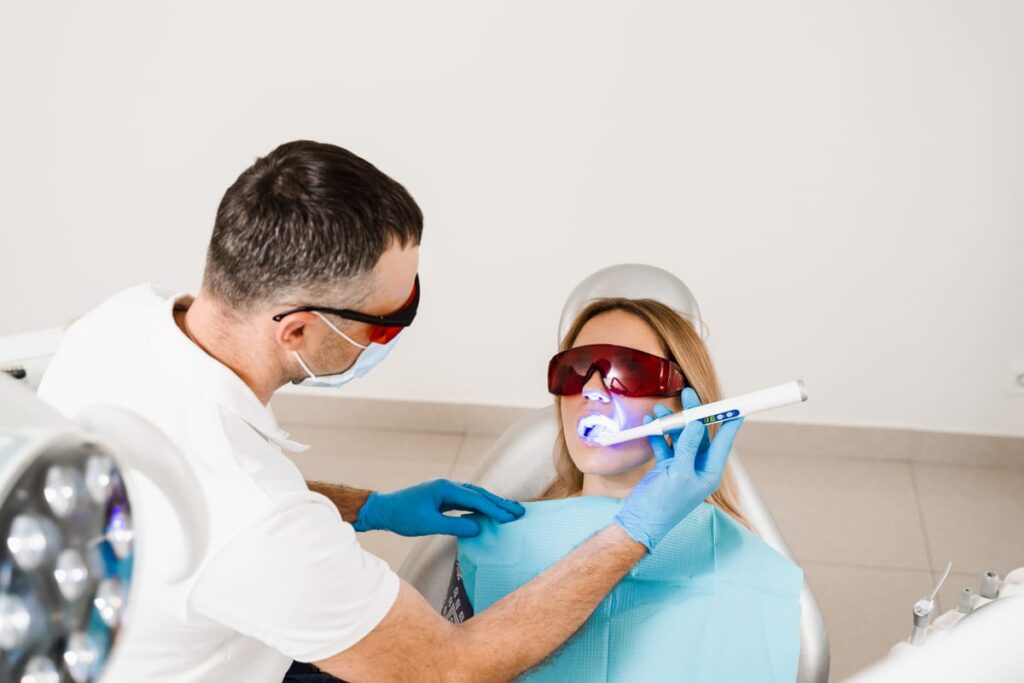
Professional in-office whitening uses higher concentrations of whitening agents under controlled conditions. Your dentist applies a protective barrier to your gums before treatment begins. This significantly reduces the risk of gum irritation.
Custom take-home trays from your dentist are another excellent option. These trays fit your exact smile, preventing gel from touching your gums. The concentration is lower than in-office treatments but higher than most store-bought products.
For patients who feel anxious about dental procedures, even cosmetic ones, Sedation Dentistry Haltom City options may be worth discussing with Dr. Vo. Comfort matters throughout your dental care journey.
Managing Tooth Sensitivity During and After Whitening
Tooth sensitivity is the most frequently reported side effect of whitening treatments. It typically occurs during treatment or within 24 to 48 hours afterward. This happens because peroxide temporarily opens microscopic channels in enamel, exposing nerve endings.
The good news is that this sensitivity is almost always temporary. It usually resolves on its own within a few days. There are several strategies to manage it effectively.
Tips for reducing whitening-related sensitivity include:
- Use a toothpaste formulated for sensitive teeth at least two weeks before whitening
- Ask your dentist about applying fluoride treatments before or after whitening
- Avoid very hot, cold, or acidic foods and drinks for 48 hours after treatment
- Space out whitening sessions to give your teeth time to recover
- Use the lowest effective concentration and the shortest treatment time
Patients with naturally thin enamel or pre-existing sensitivity require extra care. Dr. Vo can assess your enamel thickness and recommend the most appropriate whitening approach. Personalized care always produces safer, better outcomes.
Making a Safe Choice for Your Smile in Haltom City
Teeth whitening is one of the most popular and well-researched cosmetic dental treatments available. When performed correctly and on the right candidates, it is considered safe for enamel and gums. The key is starting with a professional evaluation.
At ABC 123 Family Dental – Haltom City, Dr. Peter Truong Vo takes a thorough, patient-first approach to every treatment. We check your enamel health, gum condition, and existing restorations before recommending whitening. Your long-term dental health always comes before cosmetic results.
If you are considering whitening and want honest, expert guidance, we are here to help. Book Now to schedule your appointment with our team.
Frequently Asked Questions
Does teeth whitening permanently damage enamel?
Research shows that whitening at recommended concentrations does not permanently damage enamel. Overuse or very high concentrations may cause temporary surface changes. Professional supervision ensures whitening stays within safe limits for your teeth.
How long does gum irritation last after whitening?
Gum irritation from whitening is usually mild and temporary. Most patients see symptoms resolve within 24 to 48 hours after treatment. Using properly fitted trays and dentist-approved concentrations significantly reduces the chance of irritation.
Can I whiten my teeth if I have sensitive teeth?
Yes, but extra precautions are needed. Patients with sensitivity should use desensitizing toothpaste before whitening and choose lower-concentration products. Dr. Vo can recommend a customized approach that minimizes discomfort while still achieving results.
Will whitening work on crowns or veneers?
No. Whitening agents only affect natural tooth enamel. Crowns, veneers, bonding, and other restorations will not change color with whitening treatment. If you have restorations, your dentist can discuss other options to achieve a consistent, brighter smile.
How often is it safe to whiten your teeth?
Most dental professionals recommend whitening no more than once or twice per year for in-office treatments. Touch-up treatments may be used occasionally in between. Whitening too frequently increases the risk of sensitivity and enamel surface changes over time.